Blog· August 28, 2026
Your Traffic Isn’t Dying. Your Homepage Just Moved.
Contents
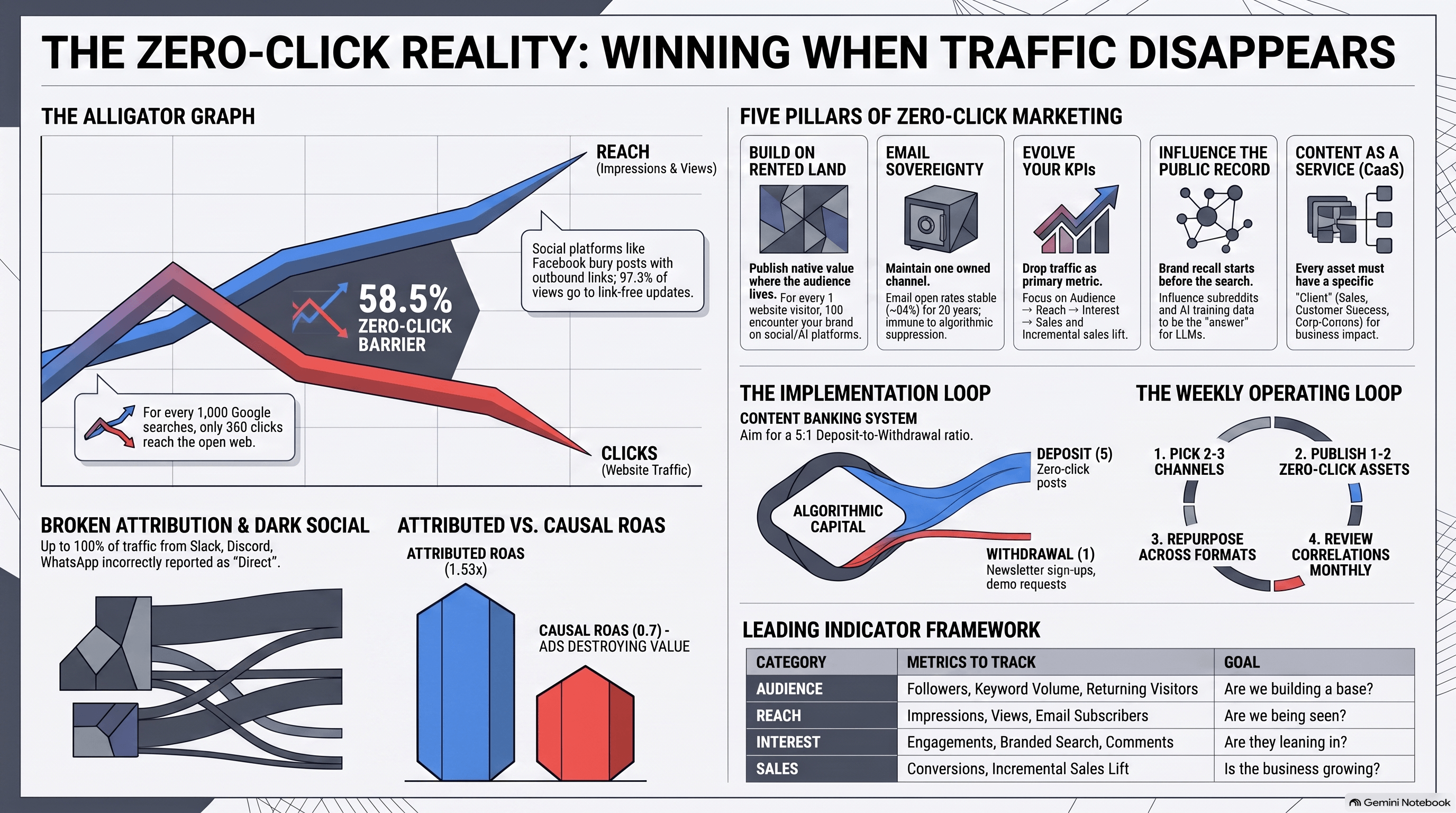
In 2024, more than half the Google searches SparkToro tracked ended without a click. 58.5%, to be exact.
Every platform now tells the same story - it’s not just a Google thing.
Amanda Natividad runs marketing at SparkToro. She coined the term “zero-click marketing,” and she just laid out the data at MicroConf.
It’s ugly - and it isn’t going away.
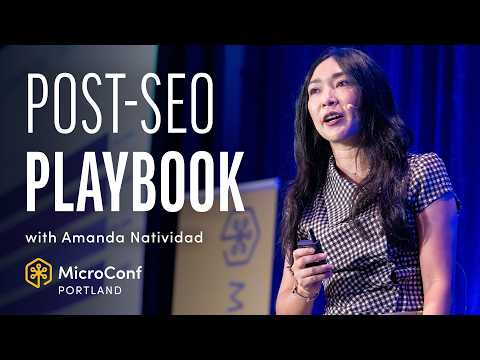
Watch the full 39-minute talk on YouTube (embedding is disabled by the uploader), or keep reading for the framework.
1.0 The Alligator Graph
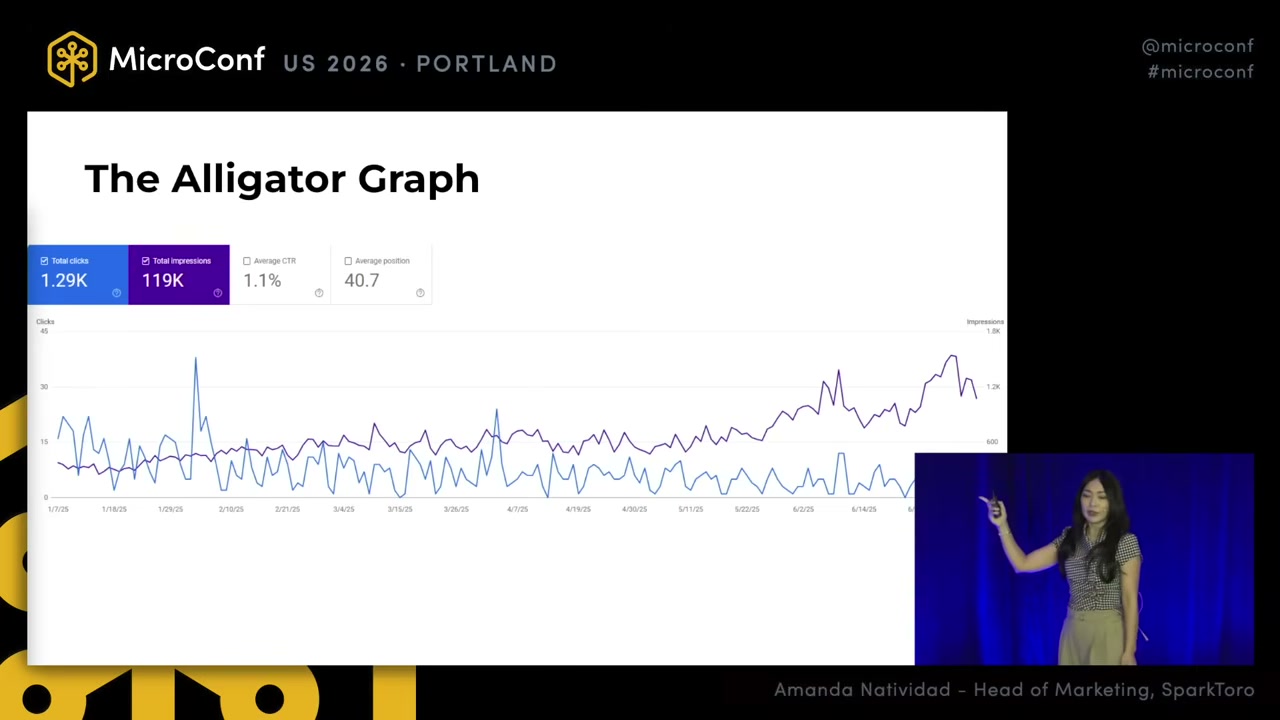
Here’s the shape of it. Impressions go up. Clicks go down.
Natividad calls it the alligator graph. Once you see it, you can’t unsee it in your own Search Console.
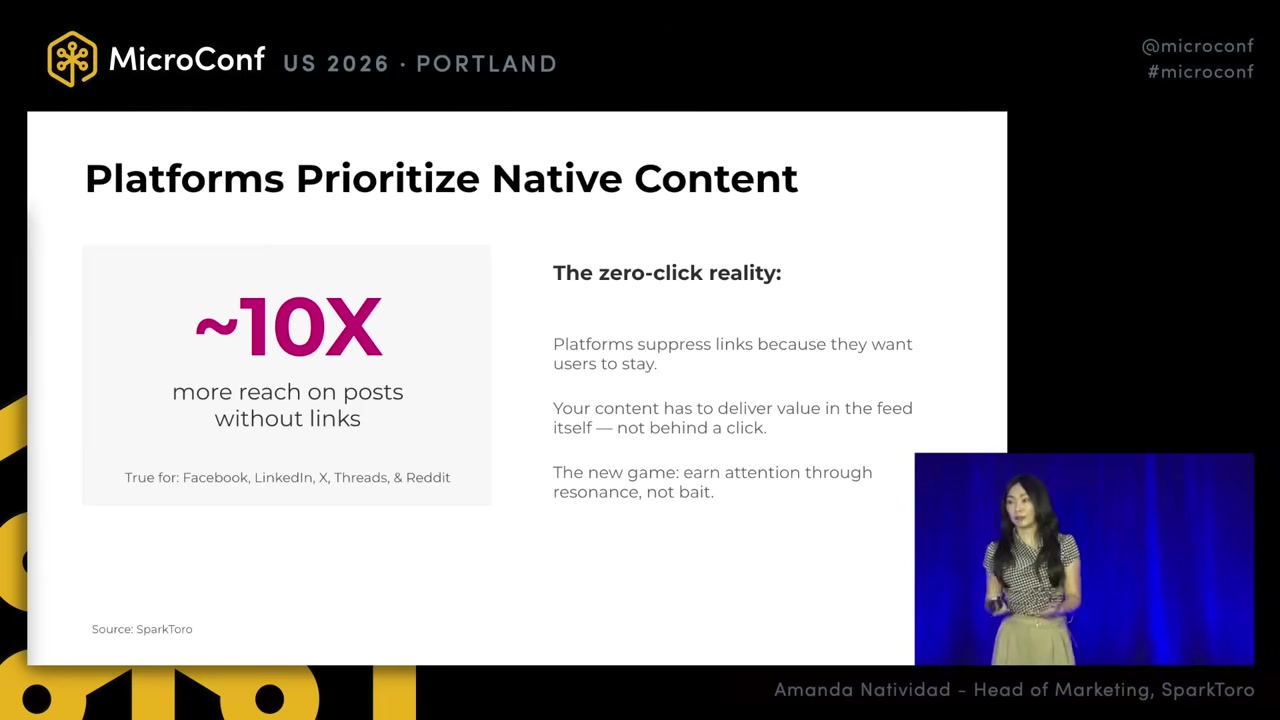
It’s not just Google. 97.3% of US Facebook post views go to updates with zero outbound links, according to Meta’s own reporting. SparkToro measured roughly 10x the reach on link-free posts across Facebook, LinkedIn, X, and Threads.
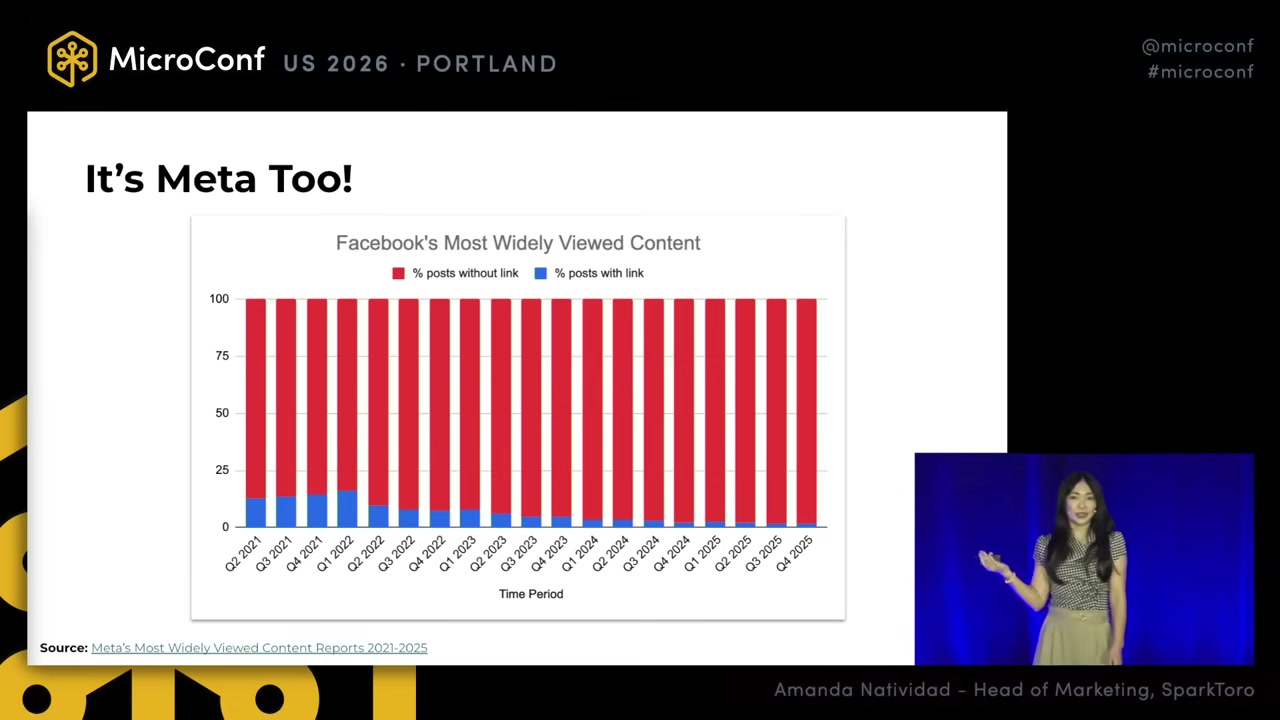
The platforms don’t want to send you traffic. They never did. They just used to be worse at stopping it.
Of the 41.5% of Google searches that produce a click at all, 70.5% go to organic results, 28.5% go to Google’s own properties, and 1% goes to paid ads. Run the math on 1,000 searches: 360 clicks reach the open web. You’re competing for those 360.
2.0 Your Attribution Is Lying To You
Here’s what will NOT fix this:
- A bigger ad budget
- A rebuilt attribution stack
- Tighter UTM tagging
None of it works. And Natividad has the proof.
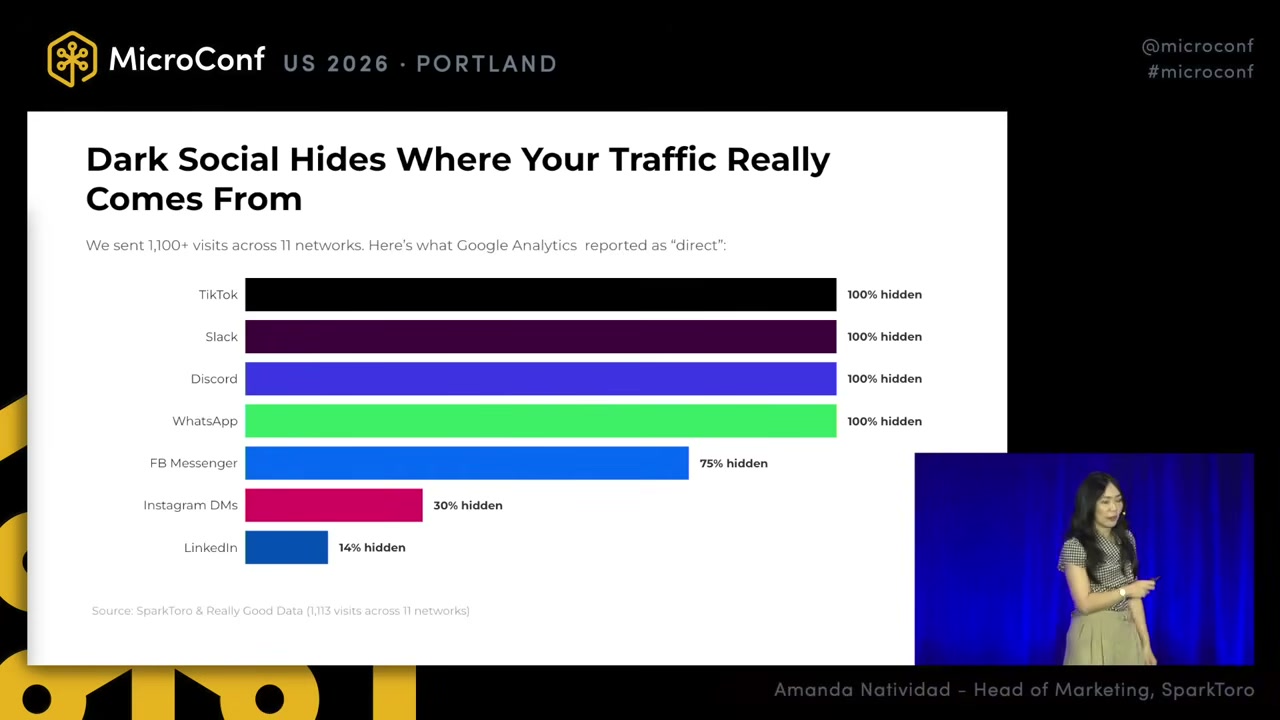
SparkToro sent 1,100 visits across 11 social networks and checked what Google Analytics reported back. 100% of the traffic from TikTok, Slack, Discord, WhatsApp, and Mastodon showed up as “direct.” Zero referral data.
75% of Facebook Messenger traffic and 30% of Instagram DM traffic vanished the same way.
Then there’s Dropbox. A peer-reviewed study in IEEE Access covered Dropbox’s month-long blackout experiments, where they turned off entire ad channels and measured what actually happened.
Attributed ROAS on mobile ads looked healthy at 1.53. Causal ROAS was 0.7 - the ads were destroying value, not creating it.
Search told the same lie, just quieter: 2x attributed, 0.92 causal, still underwater.
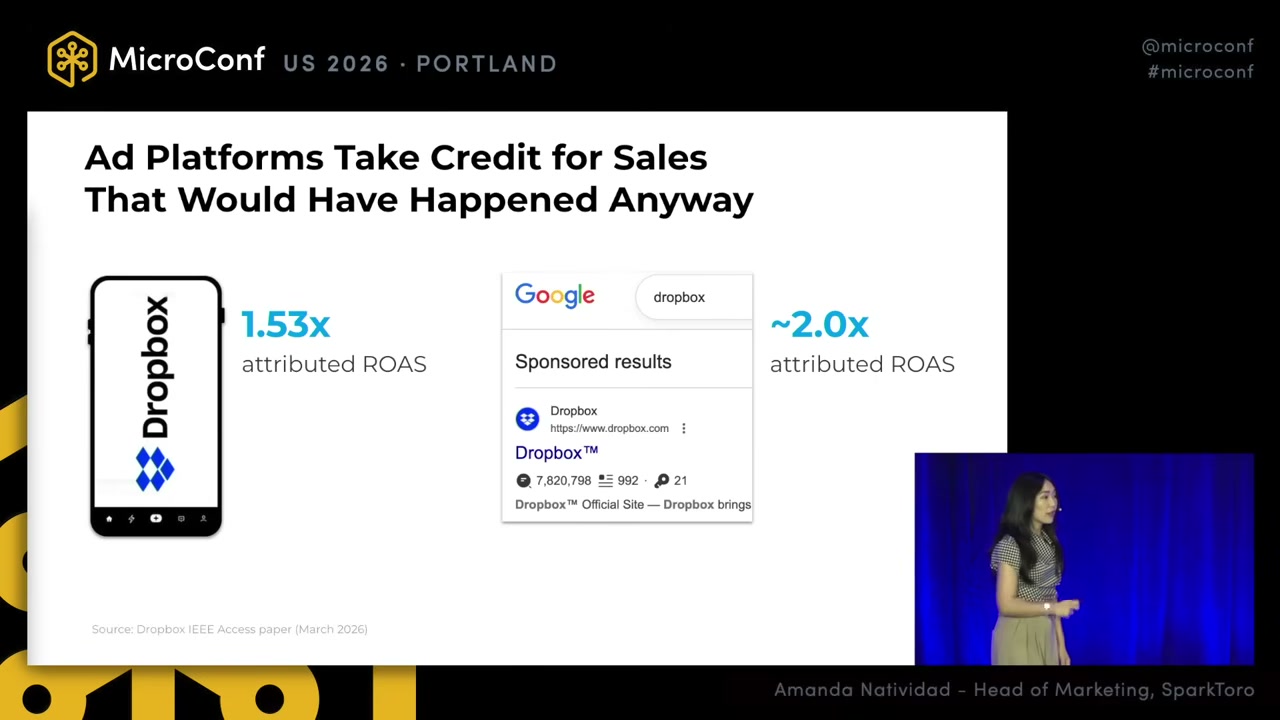
Dropbox reallocated $25 million away from the channels the causal data flagged. Their portfolio LTV to CAC improved 53%.
What you’re measuring and what’s actually working are two different things. The gap runs into tens of millions of dollars, not rounding error.
HubSpot’s organic traffic dropped 80% after Google’s algorithm updates and AI Overviews rolled out. Their Q4 2025 revenue hit an all-time high anyway. If traffic is still your headline metric, you’re reporting the wrong number to your board.
You don’t need a new dashboard to see this. You need five moves, and Natividad already named them.
3.0 The Five Moves
3.1 Build On Rented Land
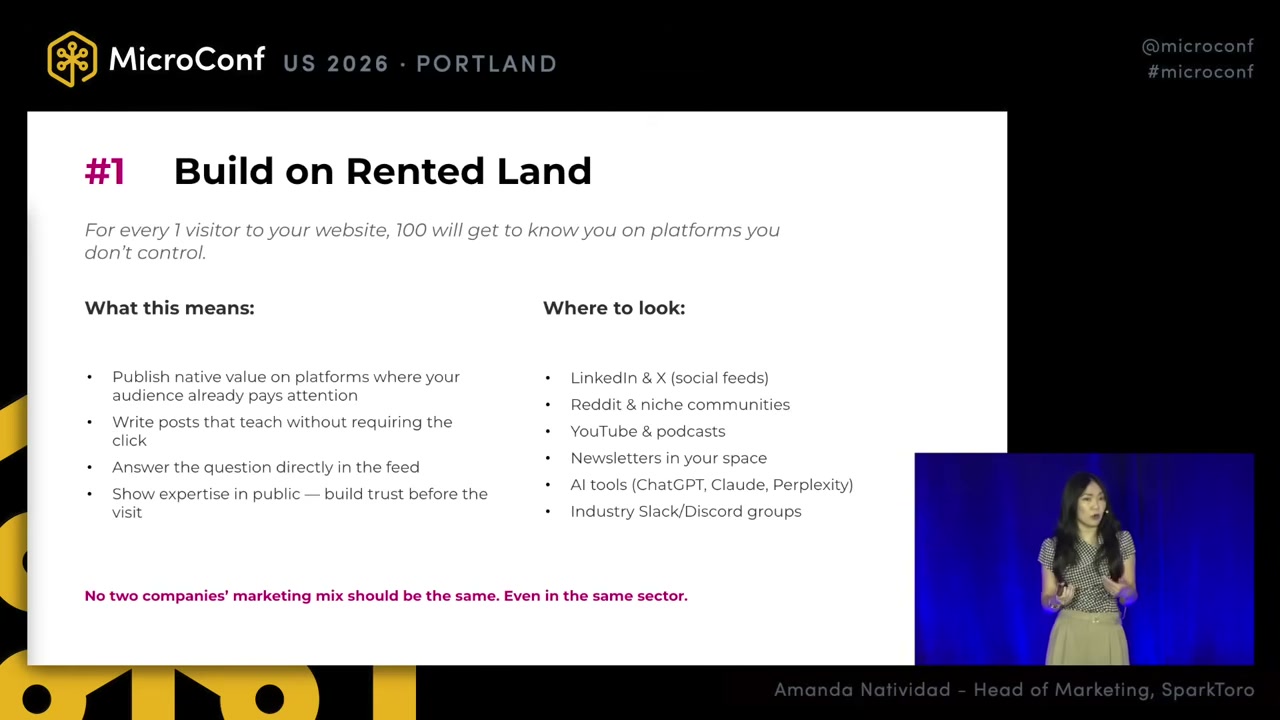
Yes, the old advice was “don’t build on rented land.”
A well-known YouTube expert I know had his million+ subscriber channel wiped out overnight after he said something Google didn’t like.
Natividad’s own colleague Rand Fishkin built 462,000 Twitter followers over 16 years before the Elon-apocalypse.
Risk with third-party platforms will always be higher, But the risk-to-reward now means the payoff’s worth it.
For every one visitor who lands on your website, 100 people will get to know you on a platform you don’t control. That’s where the attention lives, so that’s where you show up.
Publish native value where your specific audience actually hangs out, not where you wish they’d click.
3.2 Keep One Owned Channel Strong
Email open rates: 30% in 2005, 34% in 2024. Click rates have held between 2% and 4% for twenty years, through every “email is dead” cycle you’ve read.
The algorithm can’t suppress your list. The platform can’t hide it. Every rented-land post should be feeding it.
3.3 Kill Traffic As Your Primary KPI
Track four layers instead: Audience, Reach, Interest, Sales. Then correlate them against incremental sales lift.
You won’t get clean attribution. Nobody does anymore. SparkToro can’t attribute its zero-click social content in Google Analytics either, but Natividad tracks it against sign-ups two to four weeks out, and the correlation holds every time.
3.4 Win The Public Record
Search captures demand. Public evidence creates it.
Ross Simmons at Foundation Inc. found Reddit outranking individual B2B SaaS vendors on 50% to 66% of shared keywords. The advantage grows as queries get longer and more generic.
Will Reynolds at Seer Interactive found one negative review theme cited 67 times across AI outputs, ChatGPT and Perplexity both. Seer published real retention data in response. After two citations, the LLMs stopped repeating the negative one, though it crept back without regular refreshing.
If your best proof points are trapped in a Slack channel or a finance report, they’re not part of the public record. And if they’re not published, they’re not helping you.
3.5 Run Content Like A Service
Ten fields, one asset. Client team, job to be done, audience, desired action, source material, success metric, distribution plan, shelf life.
If you and your internal stakeholder can’t fill out that form, you don’t get to make the content.
Natividad ran this at Fitbit B2B. Output dropped. Impact went up, because sales started coming to her team first instead of last.
4.0 The Monday Loop
Pick 2 to 3 channels where your audience actually pays attention.
Publish 1 to 2 zero-click assets a week, no click required to get the value.
Repurpose one idea into a post, then a blog, then a newsletter line, then a podcast talking point.
Capture demand through email, branded search, or a demo request. Review it monthly. Adjust channels quarterly.
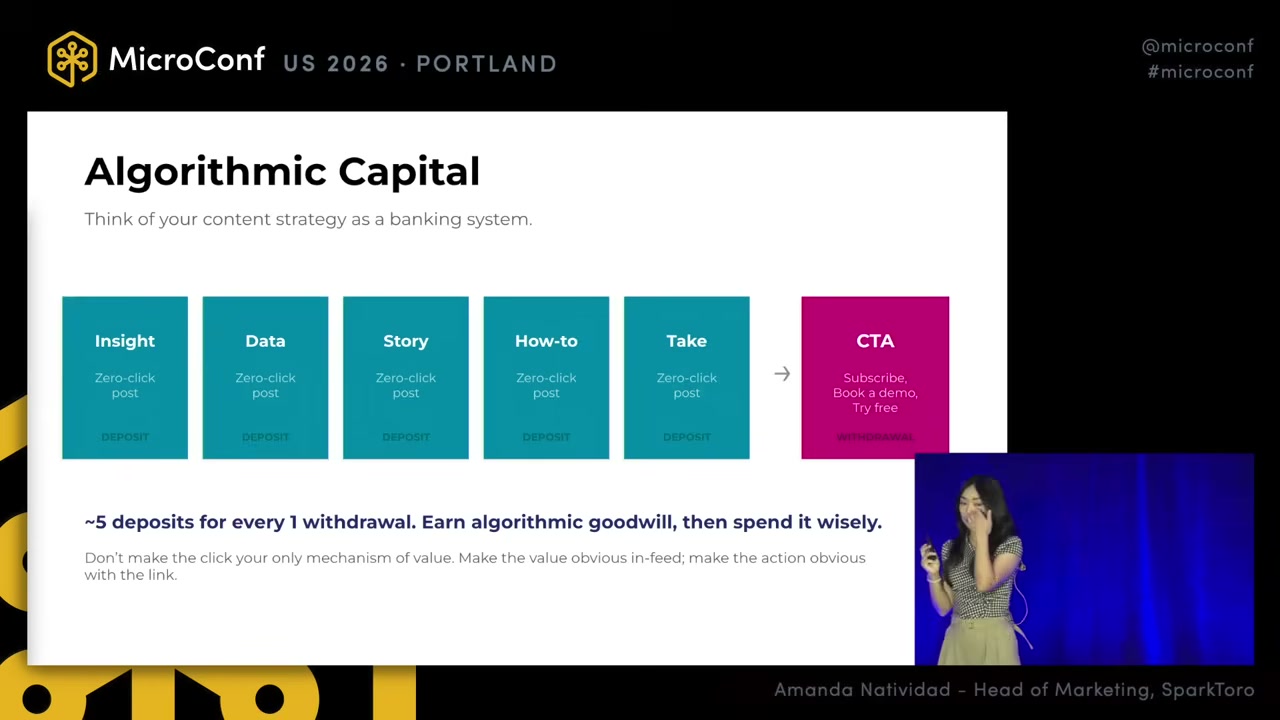
Natividad’s mental model: every zero-click post is a deposit. Algorithmic capital, goodwill with the platform, trust with the audience. Every ask, a demo, a subscribe, a signup, is a withdrawal.
Roughly five deposits for every withdrawal. Earn it before you spend it.
Most founders reading this will bookmark it and keep chasing last month’s traffic number.
The ones who post something with zero links in it this week will get a Slack DM from a prospect who “found them” three months from now.
Except they won’t have a clean way to prove it in Google Analytics.
That’s just zero-click marketing in action.