Blog· August 26, 2026
The 6 Checks Behind Every Blog Title That Converts
Contents
The first blog I ever published was for my wife’s Italian delicatessen business. It got her featured in national magazines and as a guest expert on national tv cooking programmes in the UK.
Over the years I’ve built over 200 websites, and the fundamentals of writing good blog titles is just important today as it ever has been.
Eventually, you notice clear patterns.
The ones that get clicked aren’t cleverer. They just do the basics well. As Vince Lombardi once said, ‘excellence is achieved by mastery of the fundamentals’.
But ignore those fundamentals and you’re setting yourself up for failure, every single time.
The most common mistake of all?
Describing the topic instead of making a promise.
Sure, it looks great to you when you writ them but they’re just plain boring to everyone else.
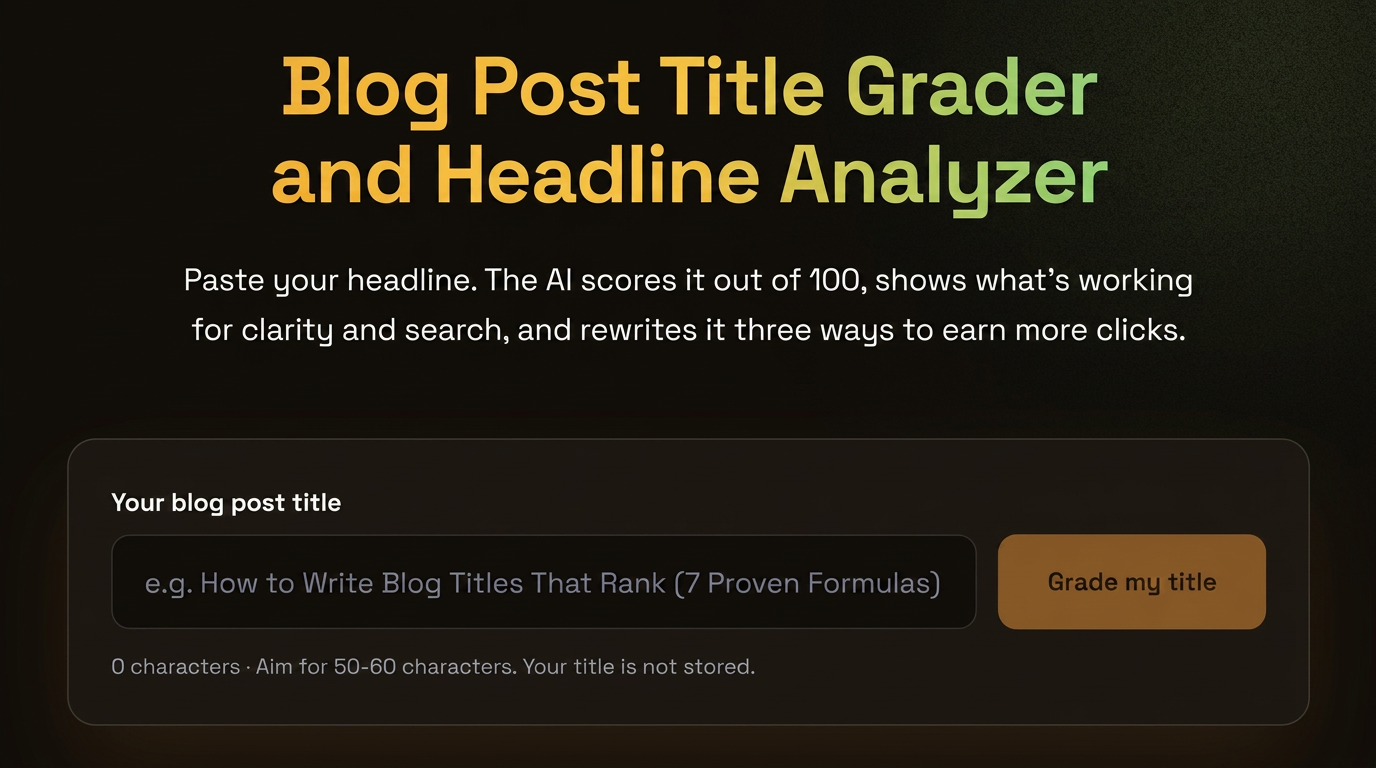
To help teach others, I built a checklist. Thanks to AI, I turned the checklist into a free, interactive tool.
The 6-point checklist
The Blog Post Title Grader scores any headline against 6 checks. I use it on every title I publish and get clients to do the same.
Here’s what it measures and why each one matters.
1. Clear promise to the reader.
Does the title tell you what you’re about to get?
“Some Thoughts on Productivity” promises nothing. You could click it and get literally anything.
“The 20-Minute Morning Routine That Fixed My Focus” tells you the format, the time commitment, and the outcome before you’ve opened it.
Readers will instinctively commit to a specific offer, not a hazy vibe.
2. Matches search intent.
Does it match what someone’s actually typing into Google?
You can write the cleverest title in the world, but if nobody’s searching for those specific words, nobody will discover it.
Clever doesn’t rank. Relevant does.
3. Specific (numbers, outcomes).
“Ways to Grow Your Blog” could be about anything. “7 Ways I Grew My Blog to 10,000 Readers” tells you the count and the result before you’ve clicked.
Numbers do the selling. Vague promises don’t.
4. Curiosity or emotional hook.
“SEO Tips for Bloggers” is a topic. “The SEO Mistake Costing You Half Your Traffic” is a threat you need resolved.
You can walk past the first one. You can’t walk past the second.
5. Good length for search results.
50 to 60 characters. That’s it.
Past 60, Google often cuts you off. The back half of your title, where the hook usually lives, just disappears.
6. Clean, readable formatting.
Title Case With Every Word Capitalized Reads Like A Corporate Memo. That used to be fine - back in 2005.
A real title, graded
I put in “RAG vs. agentic AI: what’s the real difference” and hit grade.
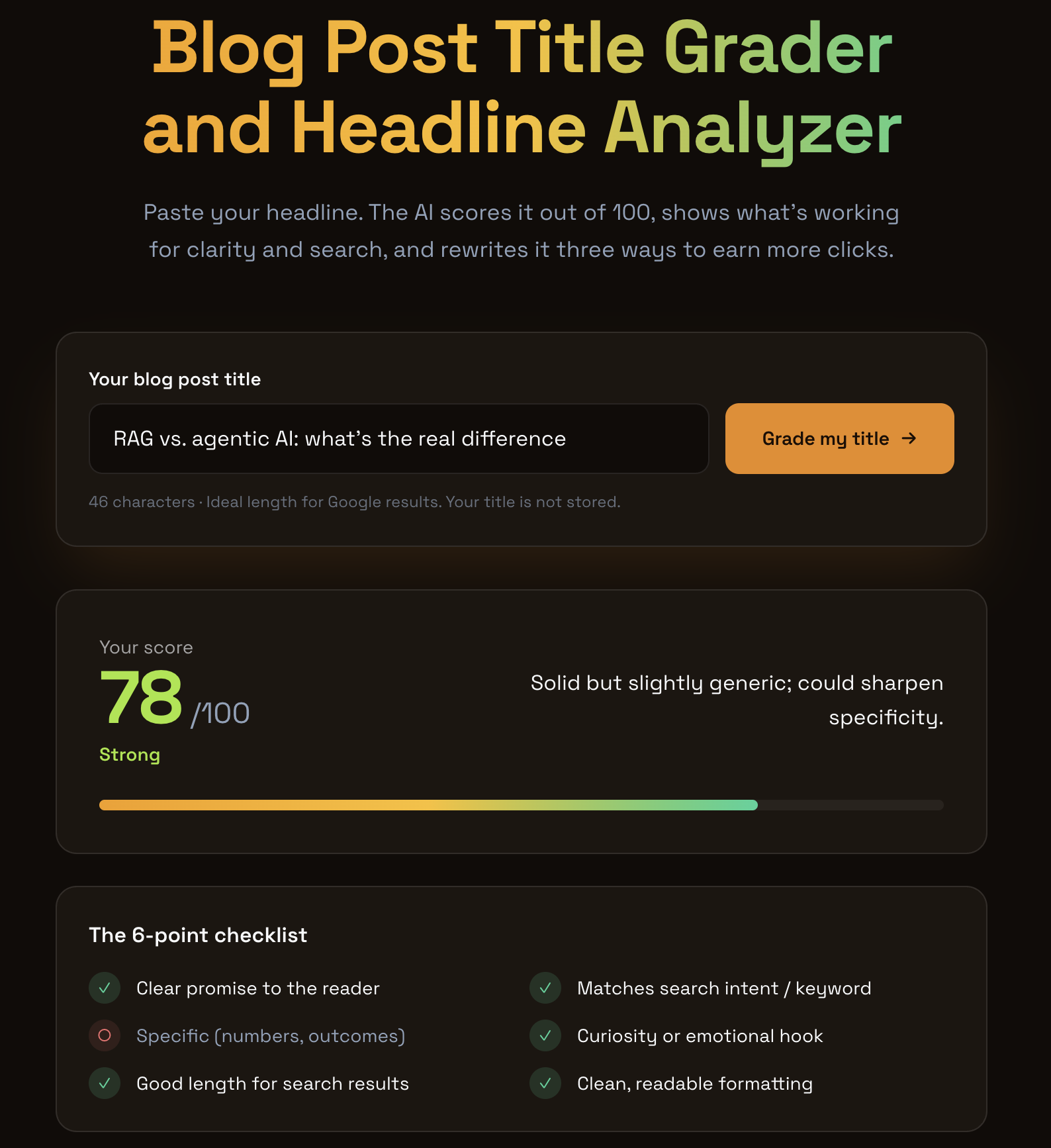
78 out of 100. Strong. But: “Solid but slightly generic; could sharpen specificity.”
Five checks pass. One fails. Specificity.
No numbers, no concrete outcomes.
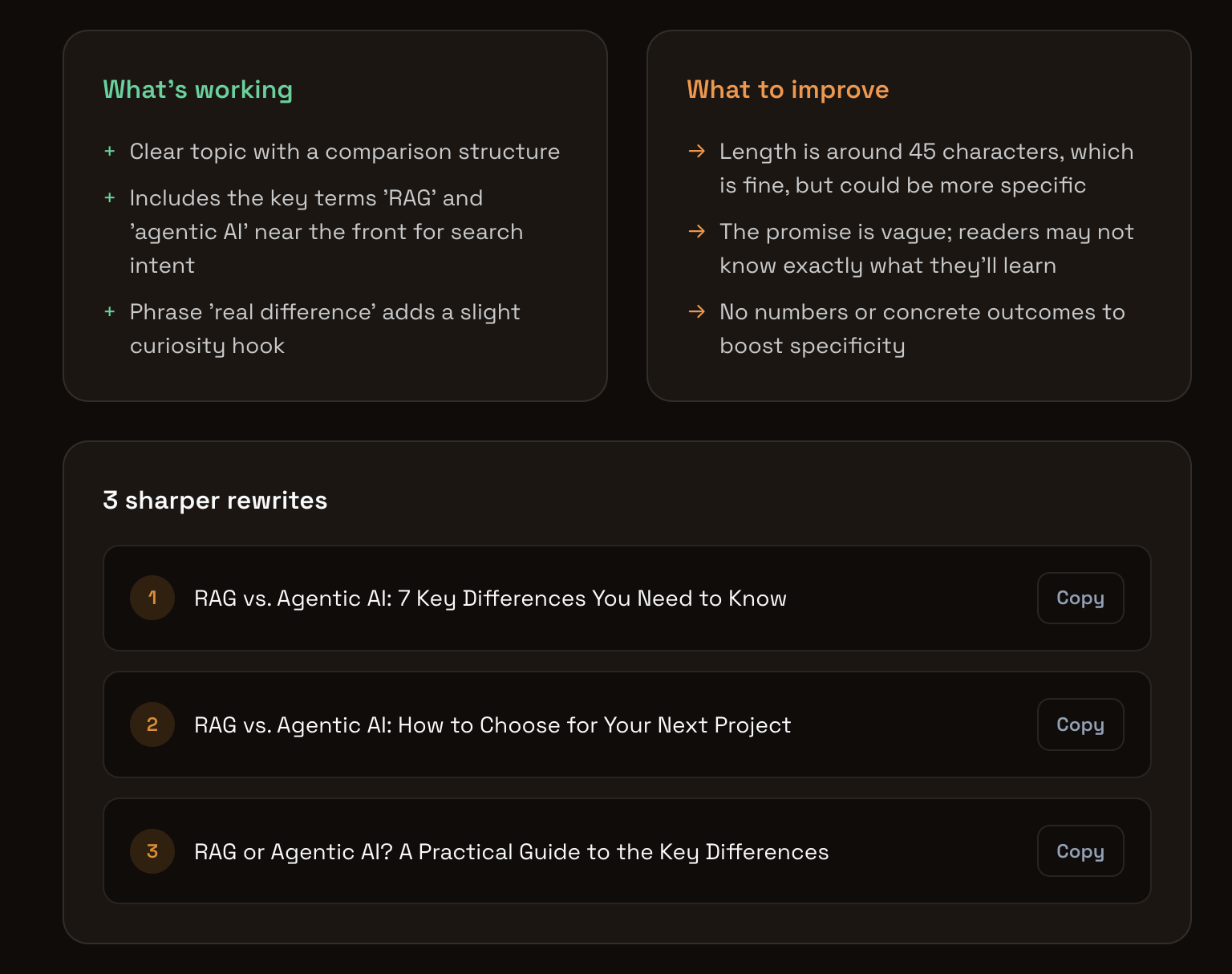
It tells you what’s working (comparison structure, key terms up front, curiosity hook from “real difference”) and what’s missing (vague promise, no numbers). Then it hands you three rewrites:
- RAG vs. Agentic AI: 7 Key Differences You Need to Know
- RAG vs. Agentic AI: How to Choose for Your Next Project
- RAG or Agentic AI? A Practical Guide to the Key Differences
Each one adds the specificity the original was missing. That’s the difference between “yeah, title’s probably fine” and actually knowing.
And yes, I graded this post’s title too
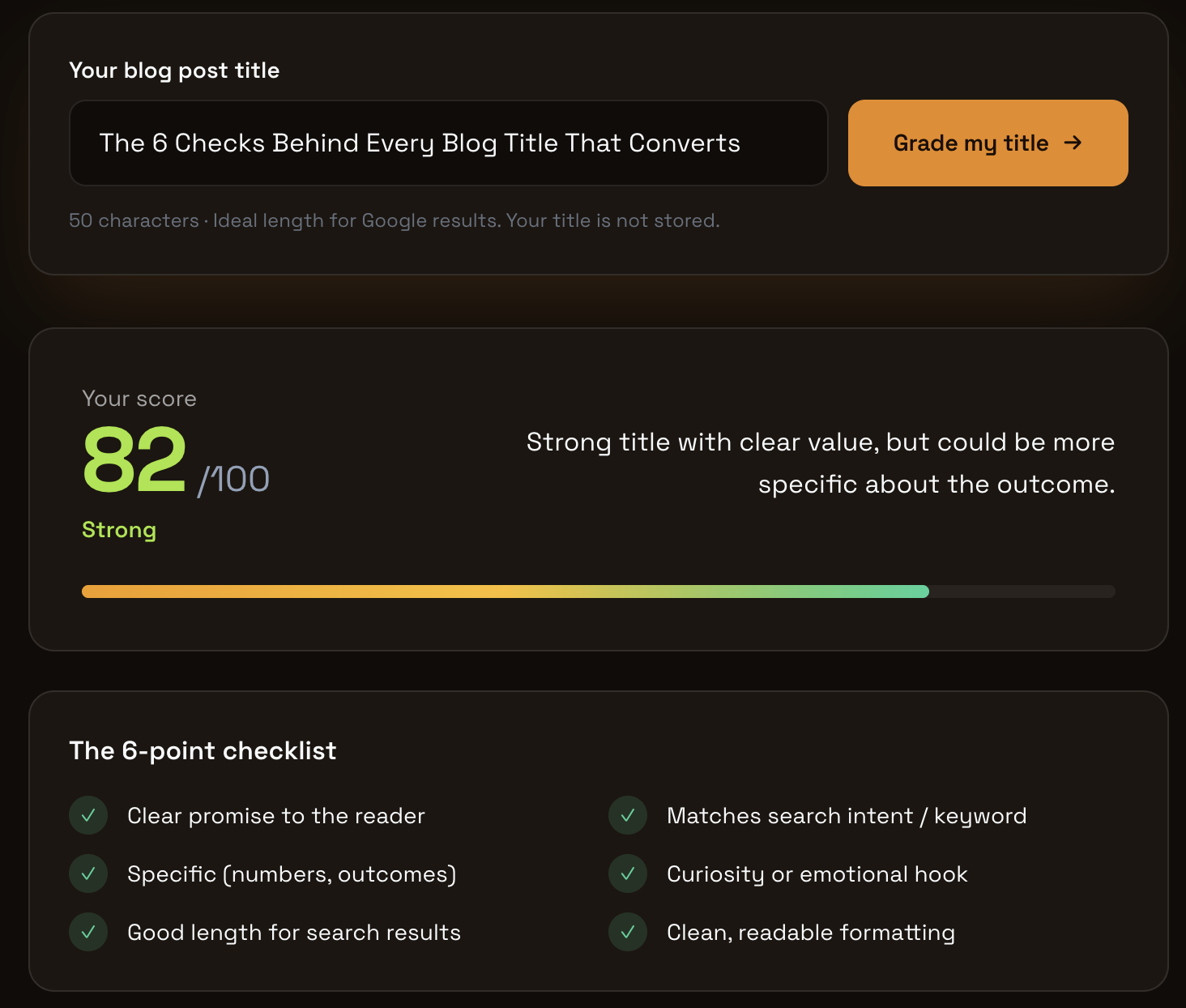
82 out of 100. All six checks pass. “Strong title with clear value, but could be more specific about the outcome.”
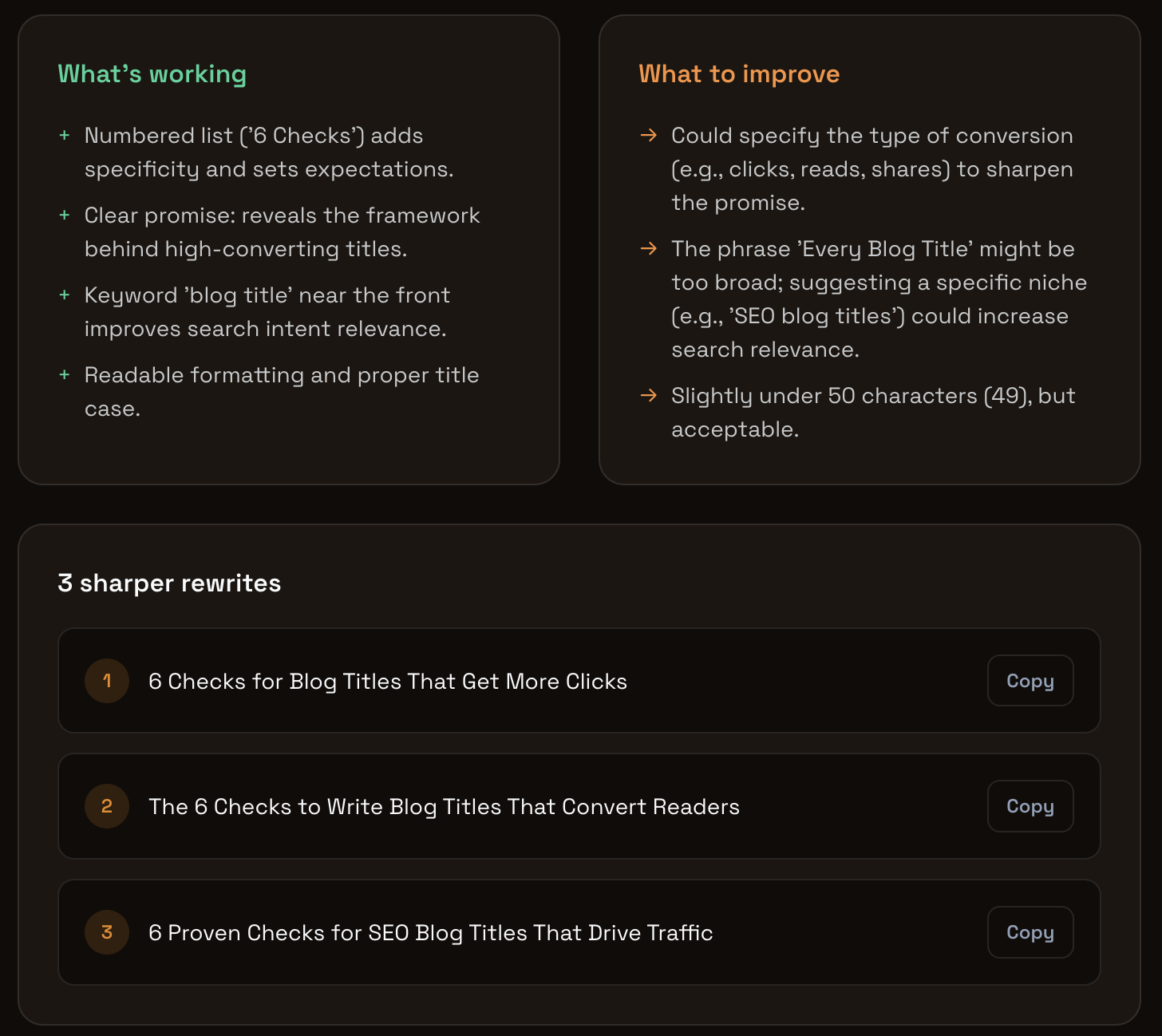
The grader’s suggested rewrites are worth looking at: “6 Checks for Blog Titles That Get More Clicks” and “6 Proven Checks for SEO Blog Titles That Drive Traffic” both sharpen the promise. I kept mine because “converts” is the word my audience uses, not “gets clicks.” But seeing the options is the point.
Works everywhere there’s a title
Your own blog. Medium. LinkedIn articles.
Substack. Anywhere with a title field.
The checklist doesn’t change based on where you’re posting. A weak promise is a weak promise on any platform.
Why not just ask ChatGPT?
You can. It’ll tell you the title is “directionally good” then take 300 words to suggest something only slightly different.
What it won’t do is score against a framework, show you which check failed, and rewrite YOUR title to close the gap.
I recommend this to clients for the same reason I use it myself.
It replaces “I think this works but am not sure” with a number plus a list of what’s missing.
Do your blog a favour and grade your next title before you hit the publish button.
Then get ready for a pleasant surprise when you check your analytics.