The AI Teardown· August 25, 2026
Contents
6 YouTube Title Rules Most Creators Break
Most creators are still writing one title and hoping. YouTube stopped waiting for you to guess a while ago.
Test and Compare rolled out to every creator with advanced features at the end of last year. Run three titles, three thumbnails, or three full combinations against each other on the same video, and YouTube crowns the winner by watch time, not raw clicks.
That last part matters. A title that tricks someone into clicking and then loses them isn’t a winning title anymore, YouTube can tell.
Here’s the six-point framework I built to make sure the three you submit are actually worth testing, not just different from each other.
Packaging Beats The Video Every Time
None of this matters if you’re not on YouTube in the first place. It doesn’t matter if you’re B2B or B2C, that’s where your buyers already go to find content, compare options, and figure out who to trust.
That’s not really optional anymore. More than 2.5 billion people use YouTube every month, and together they watch over a billion hours of video a day.
If you’re serious about being found and you don’t have a channel, you’re not neutral on YouTube. You’re just absent from where your audience already spends its time.
Lighting, editing, scripting, how to actually make a good video: that’s real, and it’s a separate problem. Not today’s topic.
Here’s the part almost nobody treats seriously enough: the video matters less than the packaging. Packaging is two things, the title and the thumbnail.
Nothing else matters until someone’s clicked.
Not your hook at the three-second mark.
Not your editing.
Not your call to action at the end.
Nothing gets watched if the click never happens.
So the job changed. Here’s what you don’t need anymore:
- One title, hoped into place
- A single guess at what’ll land
- Luck
What you need is three real options, and a way to know which one’s actually earning the click before YouTube decides for you.
Score Each One Against All Six, Not Just One
Most people fix one lever and call the title done. Here’s all six.
-
Emotion. Make them feel a decision before they’ve watched a single frame. “New video is up” feels like nothing. Naming the cost, the mistake, or the stake gets a reaction before the thumbnail even loads.
-
Curiosity. Leave the gap open instead of closing it. State the conclusion in the title, and there’s nothing left to click for.
-
Specificity. Vague titles ask for trust you haven’t earned yet. A number, a timeframe, or a named mechanism turns a guess into a promise you can check.
-
Pain point. Name the exact problem someone’s already annoyed by, not the general topic around it. “Editing tips” is a shelf. “Stop losing viewers in your first ten seconds” is a diagnosis.
-
Formatting. Skip the caps lock and the exclamation marks. They read as spam the second a viewer’s seen the trick used badly once, and a clean bracket tag does the same job without asking for anyone’s trust upfront.
-
Click-worthiness. This isn’t a seventh trick, it’s the average of the other five. Nail one hard and leave the rest flat, and the title still flops.
See It Graded On A Real Title
I built a free tool around this exact framework. Paste a title, get scored against all six, get three rewrites you can steal. That’s exactly how many titles YouTube lets you test at once.
Here’s what that actually looks like on a real title, not a mockup.
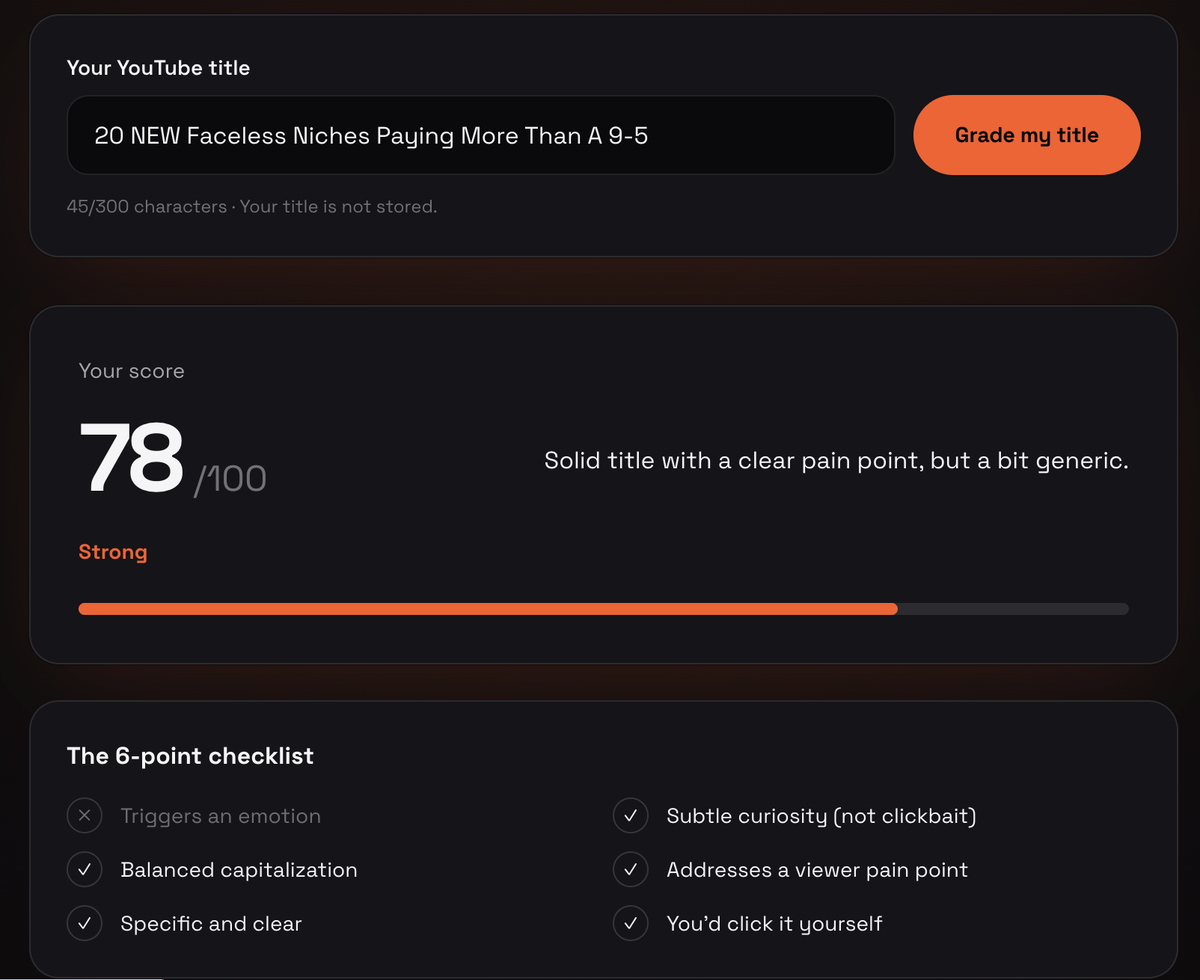
It doesn’t stop at a number. It shows the reasoning, then hands over three rewrites already built to score higher.
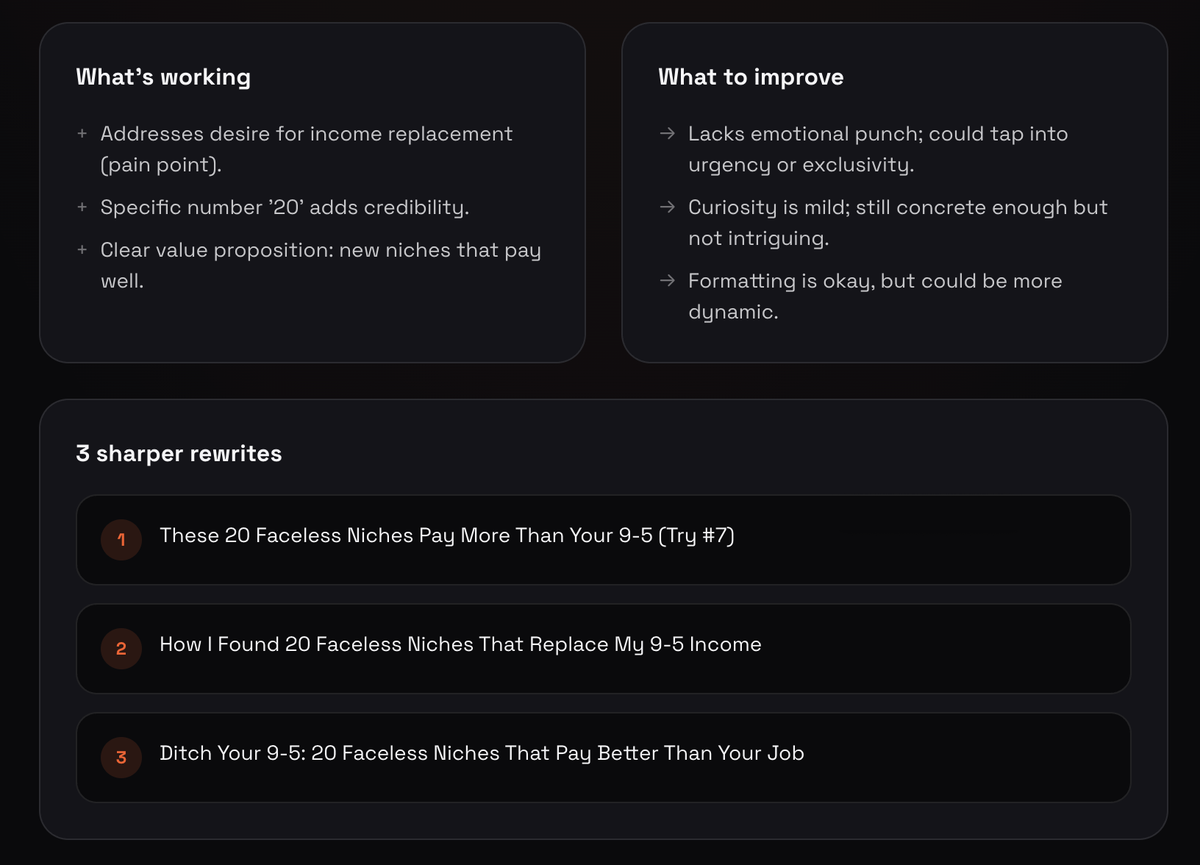
Run your next title through it before you publish. Not after the video’s already buried and you’re wondering what happened.
Score all three before you publish. That’s how a title stops being a guess and starts pulling in real, organic views for free.